
Structural prototypes to end-use parts.
Fused deposition modelling in PLA, PETG, ABS, ASA, and Nylon for concept models through to production components. Layer orientation is engineered for load paths — not just print speed.
- ·Functional brackets, housings, and enclosures in engineering plastics
- ·Jigs, fixtures, and tooling aids for production lines
- ·Form-fit-function prototypes before committing to injection mould tooling
- ·Low-volume production runs of 1–500 identical parts
What materials are available for FDM 3D printing?
We print FDM in PLA and PETG for standard work, and ABS, ASA, and Nylon (PA12) for engineering-grade parts requiring heat or UV resistance. All materials are sourced from certified suppliers and process-qualified on our machines.
FDM material properties →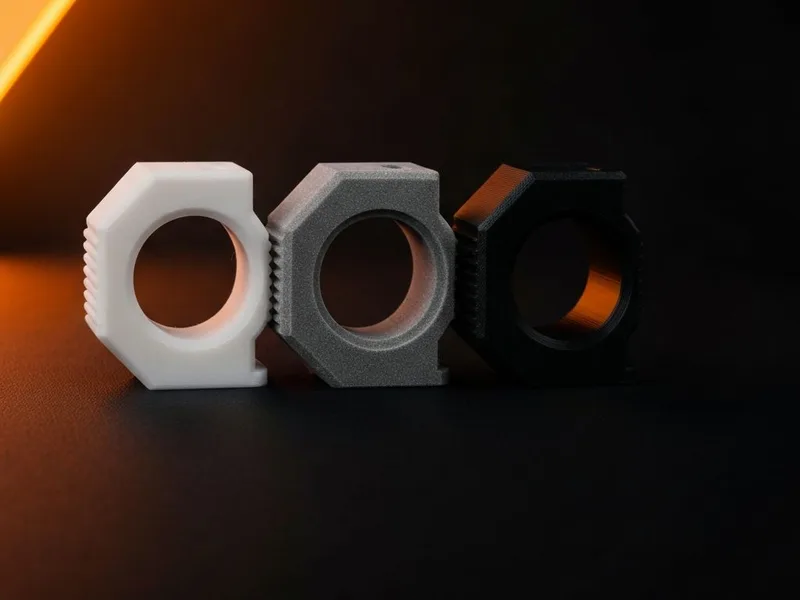
25-micron layers. Surface that speaks.
Stereolithography in standard and engineering-grade resins for high-detail visual prototypes, master patterns, and medical applications. 25-micron layer resolution delivers smooth as-printed surfaces that require minimal post-processing.
- ·Visual prototypes and master patterns for vacuum casting
- ·Dental and medical device components in certified biocompatible resins
- ·Jewellery and fine-detail consumer product prototyping
- ·High-precision fit checks and mating interface validation
How accurate is SLA printing for precision parts?
Our SLA Standard process holds ±0.1mm tolerance. SLA Professional in castable or dental resin achieves ±0.05mm — suitable for medical devices and jewellery master patterns.
SLA printing deep-dive →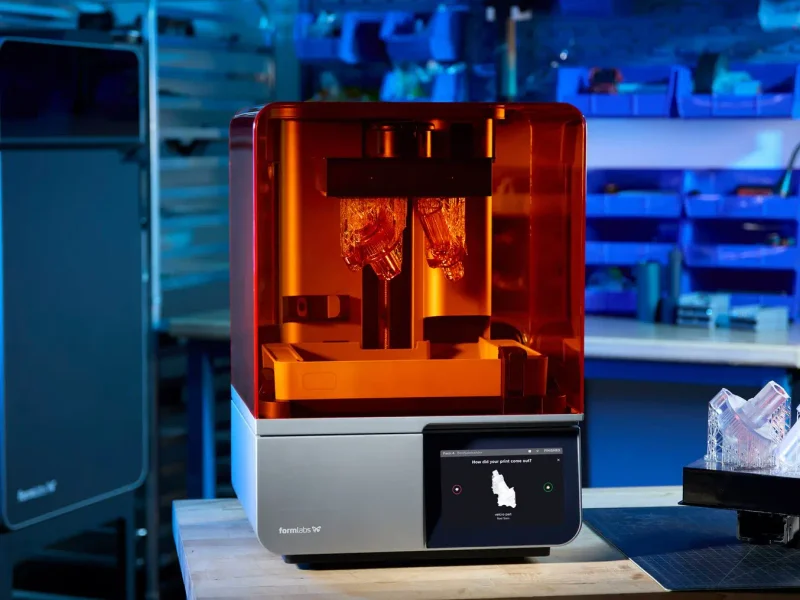
Fully dense metal. Complex geometries.
Direct Metal Laser Sintering for fully dense, end-use metal parts in aerospace and medical alloys. Internal cooling channels, lightweight lattice structures, and consolidated assemblies are native to the process — not workarounds.
- ·Aerospace structural brackets and ducting in Ti-6Al-4V and Inconel 718
- ·Medical implants and surgical tools in 316L and 17-4 PH stainless steel
- ·High-temperature tooling inserts in H13 Tool Steel with conformal cooling channels
- ·Lightweight topology-optimised components that eliminate fastener assemblies
What metal alloys can you print with DMLS?
Our DMLS system processes 316L stainless steel, 17-4 PH stainless steel, H13 tool steel, Ti-6Al-4V titanium, and Inconel 718. All materials are certified to aerospace and medical supply chain standards.
Metal alloy properties guide →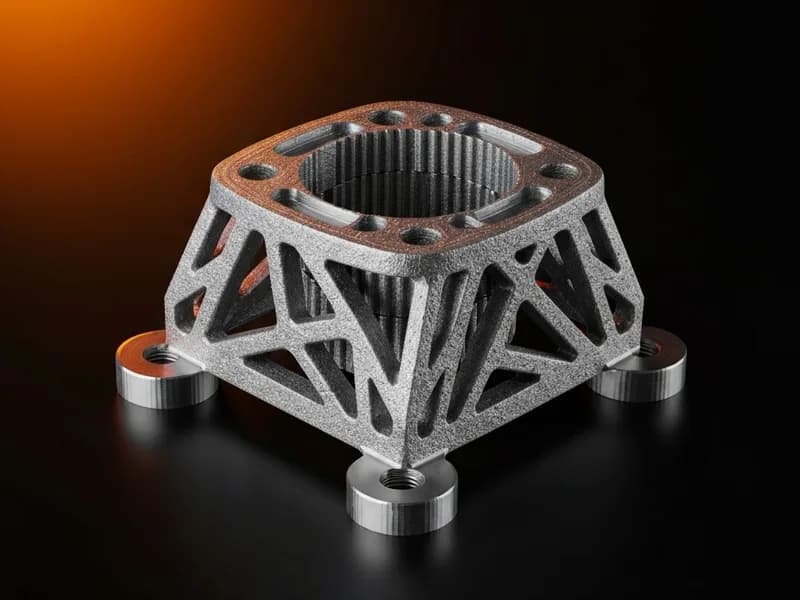
Bridge tooling at 60% of CNC cost.
Hybrid metal 3D-printed mould inserts for soft and bridge tooling. Validate injection-moulded geometries and produce first-run samples before committing to CNC production tooling. Quote-based; includes mould fabrication and first-run samples.
- ·Bridge tooling for 50–5,000 first-run injection-moulded parts
- ·Geometry validation before committing to full CNC production mould investment
- ·Conformal cooling channels in H13 inserts for faster cycle times
- ·Aluminium 7075 inserts for softer materials and short-run consumer products
What is the difference between your Injection Tooling service and a production mould?
Our Injection Tooling service produces hybrid metal inserts for bridge and soft tooling — ideal for validating geometry and producing 50–5,000 first-run samples before committing to a full production CNC mould. Cost is typically 60–70% lower than machined tooling.
Injection tooling guide →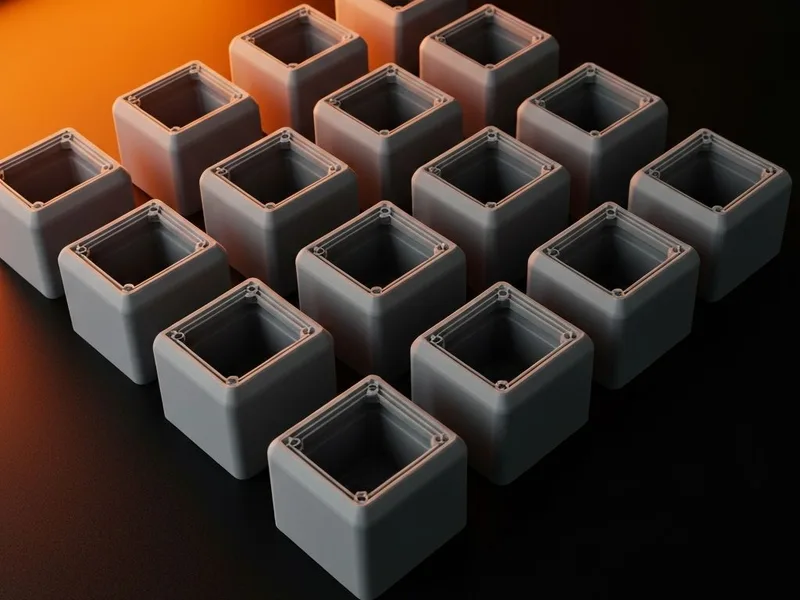
Clean kerf. No secondary deburring.
CNC fibre laser cutting for sheet metal and flat acrylic components. Clean kerf edges and precise hole geometries on mild steel, stainless steel, aluminium, and acrylic — no secondary deburring required on most profiles. Quote-based on material, thickness, and cut length.
- ·Sheet metal structural components with precision-cut holes and slots
- ·Acrylic panels, displays, and enclosure windows with clean edge quality
- ·Aluminium brackets and mounting plates for electronics and industrial equipment
- ·High-volume blanks for downstream CNC bending operations
What sheet thicknesses can you laser cut?
We cut mild steel up to 16mm, stainless steel up to 12mm, aluminium up to 10mm, and acrylic up to 20mm. Edge quality is clean-kerf on most thicknesses — no secondary deburring required.
Sheet metal guides →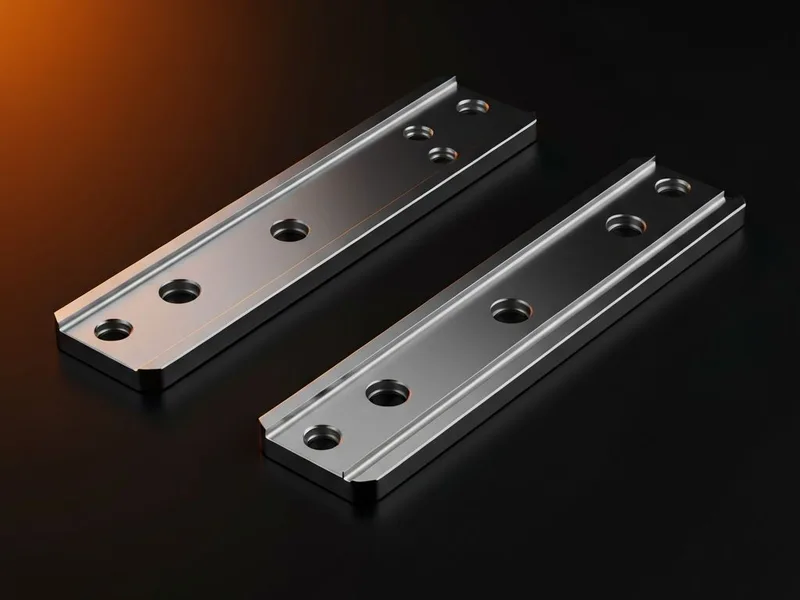
Single-source sheet metal.
Press-brake bending for sheet-metal components requiring precise bend angles and tight inside radii. Complementary to our laser cutting service — blank goes from laser to press brake without handling between suppliers. Quote-based on material, thickness, and bend sequence.
- ·Enclosures and chassis requiring multiple bend sequences and tight corner radii
- ·Mounting brackets paired with laser-cut blanks from the same order
- ·Structural channels and angle sections for machine frames and equipment
- ·Sheet metal housings for electronics requiring EMI shielding continuity
Can you handle CNC bending after laser cutting?
Yes. We offer CNC bending as a complement to laser cutting — single-source sheet metal means your blank goes from laser to press brake without handling between suppliers. Quote covers both operations.
Sheet metal manufacturing →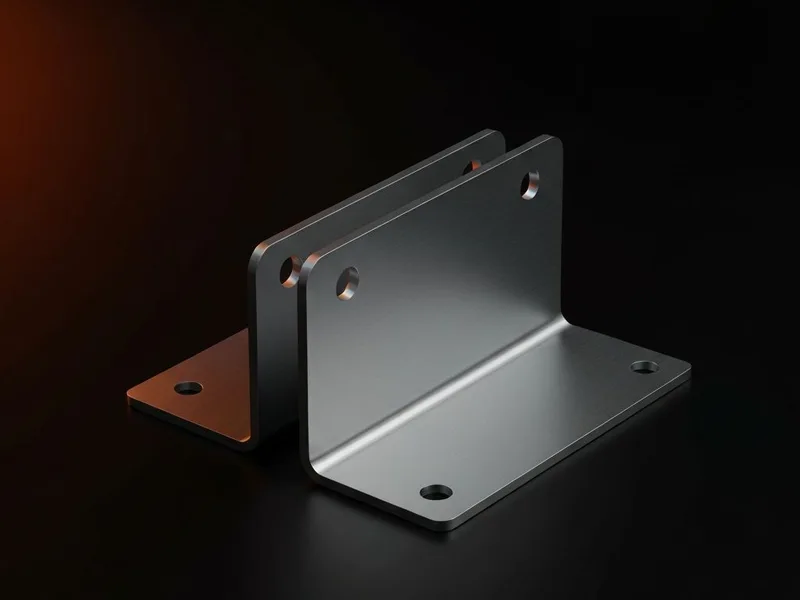
Nylon complexity, no supports, any geometry.
Selective laser sintering in PA12, glass-filled PA12-GF and carbon-filled PA12-CF — the process for snap-fit assemblies, internal channels and isotropic functional parts that cannot be supported in FDM. Delivered via our certified partner network under our ISO 9001 quality system with full documentation.
- ·Complex snap-fit assemblies and living hinges that cannot be FDM-printed without supports
- ·Functional nylon enclosures with internal ribs, bosses and multi-direction features
- ·Batch production of 10–500 identical parts with isotropic mechanical properties
- ·Lightweight electronics housings with EMI apertures and integrated cable routing
When should I choose SLS over FDM?
Choose SLS when your part has internal channels, snap-fit mechanisms, thin walls in multiple directions, or needs isotropic mechanical properties — SLS uses no support structures, so any geometry prints with consistent surfaces on every face. FDM is cheaper for simple geometry; SLS is better for functional complexity. Materials: PA12, glass-filled PA12-GF, carbon-filled PA12-CF and flexible TPU.
FDM vs SLA vs SLS — full comparison →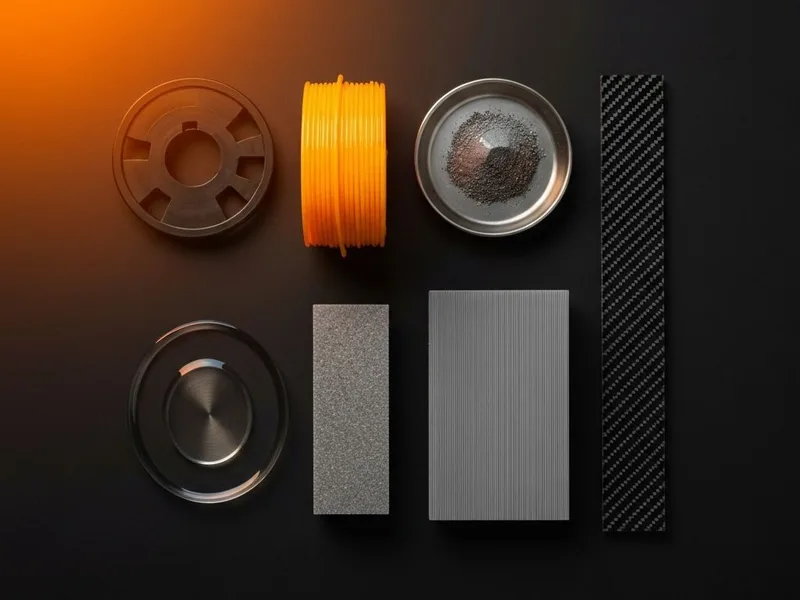
Built for sectors
that demand precision.
From ISRO suppliers to jewellery ateliers — every part leaves our floor meeting the tolerance the application demands.
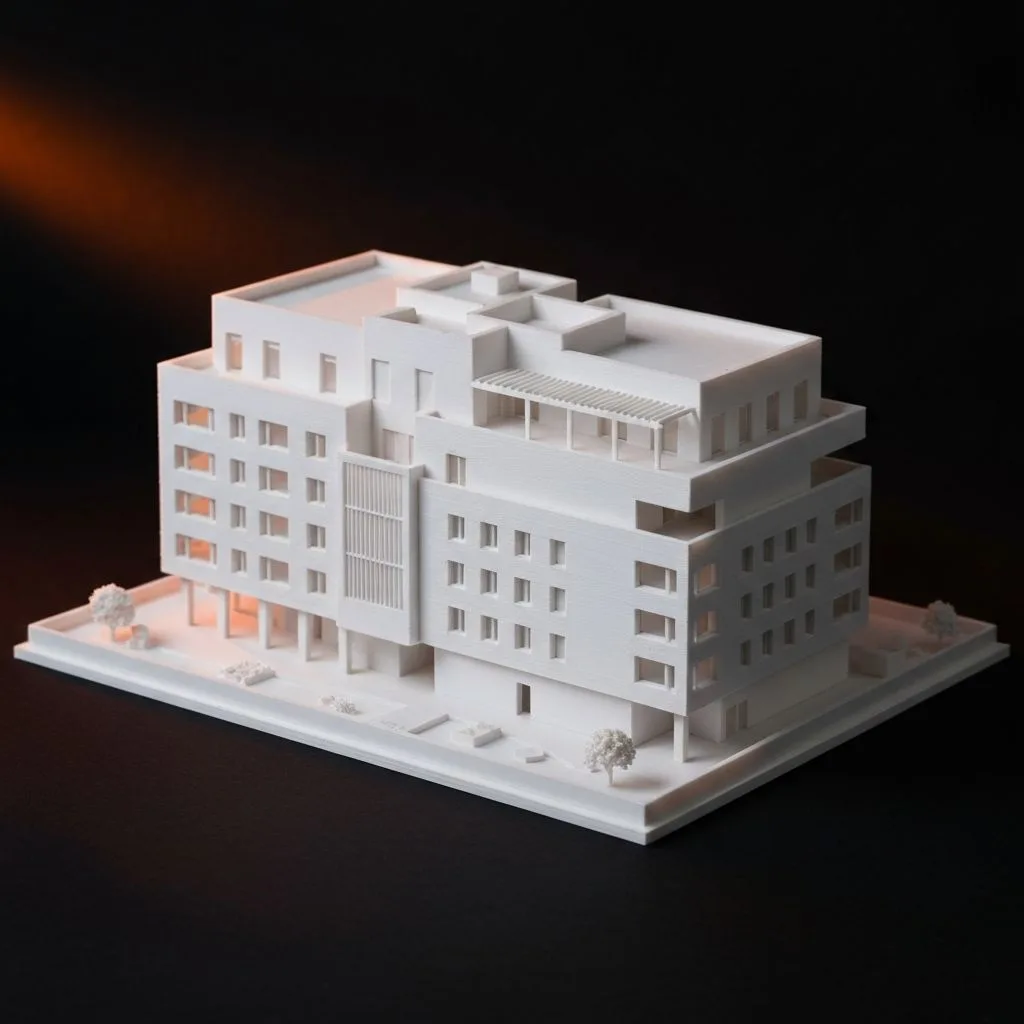
Scale models, spatial studies and facade mockups — from concept massing to client-presentation detail. Every layer at the resolution the architect demands.
Architecture
1:50 resolution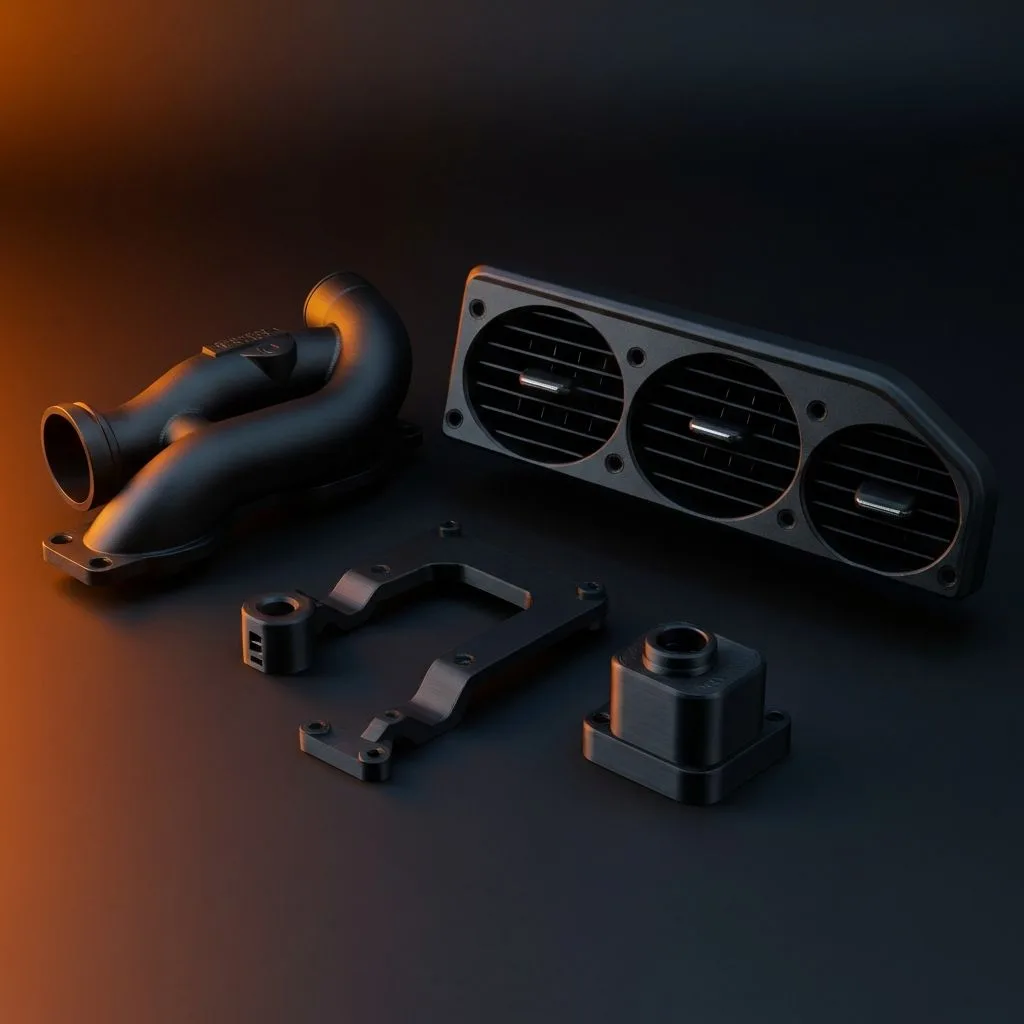
Jigs, fixtures, brackets and production-ready parts for OEM and Tier-1 supplier programmes.
Automotive
OEM · Tier-1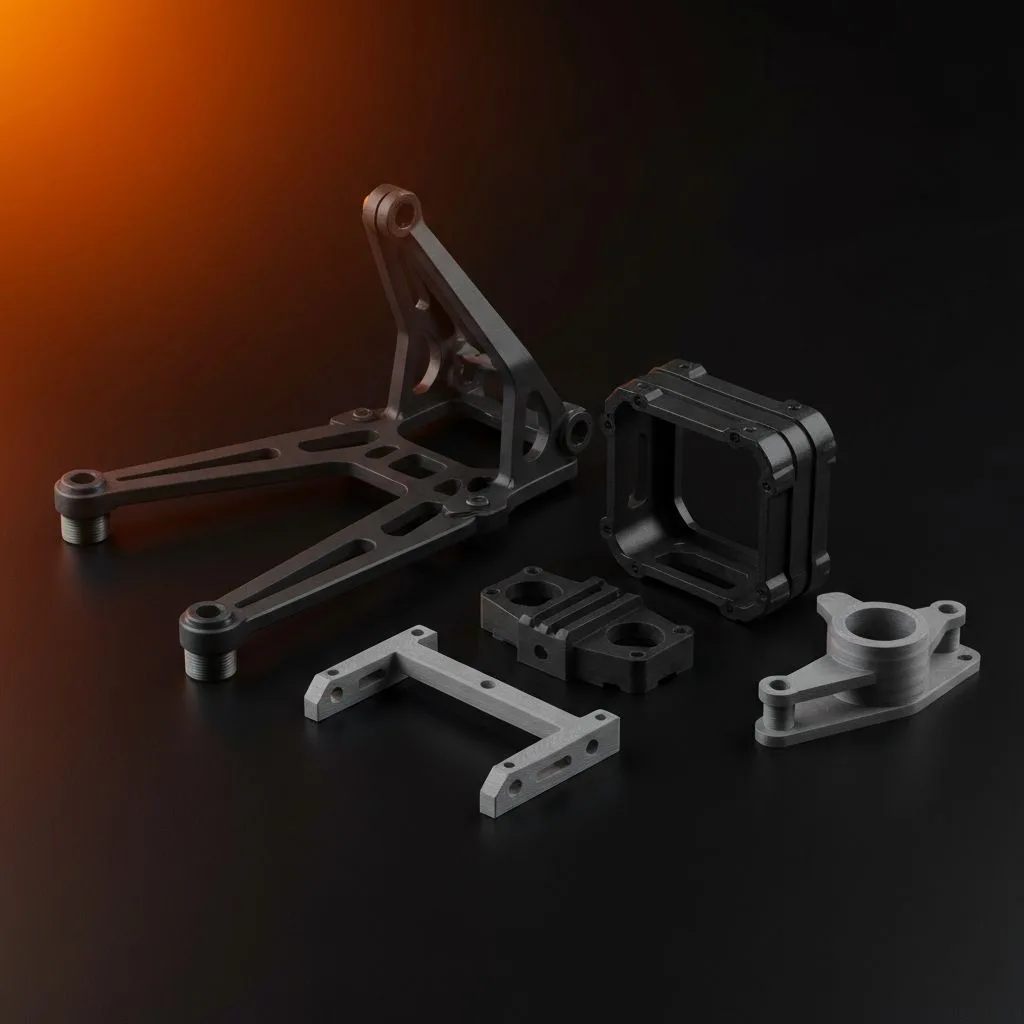
High-strength titanium and Inconel structural components for defence-grade thermal and mechanical applications.
Defence
Ti · Inconel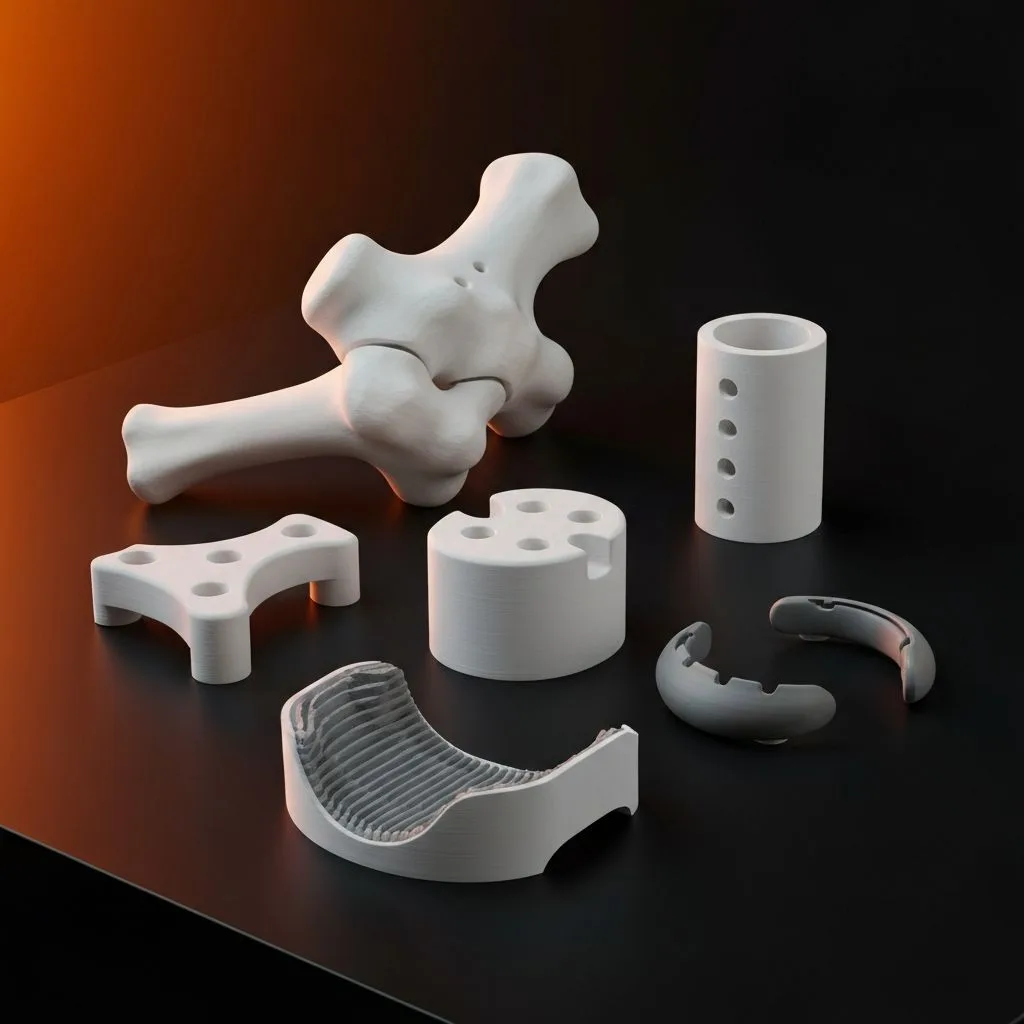
Biocompatible SLA and DMLS parts for medical devices, surgical guides, orthotics and dental prosthetics.
Healthcare
Biocompatible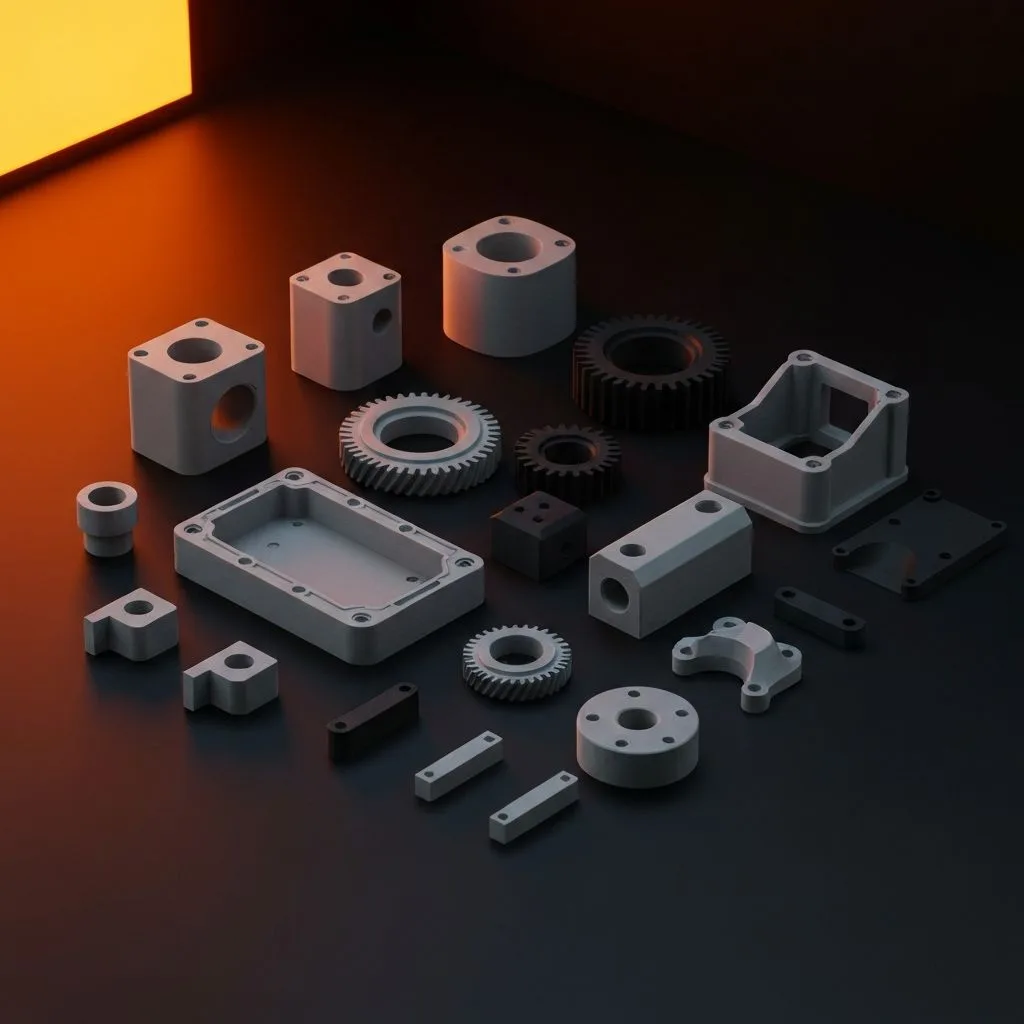
Rapid iteration at every design stage — from concept foam-fit models to pre-production tooling validation. Multi-process runs, single point of contact.
Industrial Prototyping
48h turnaround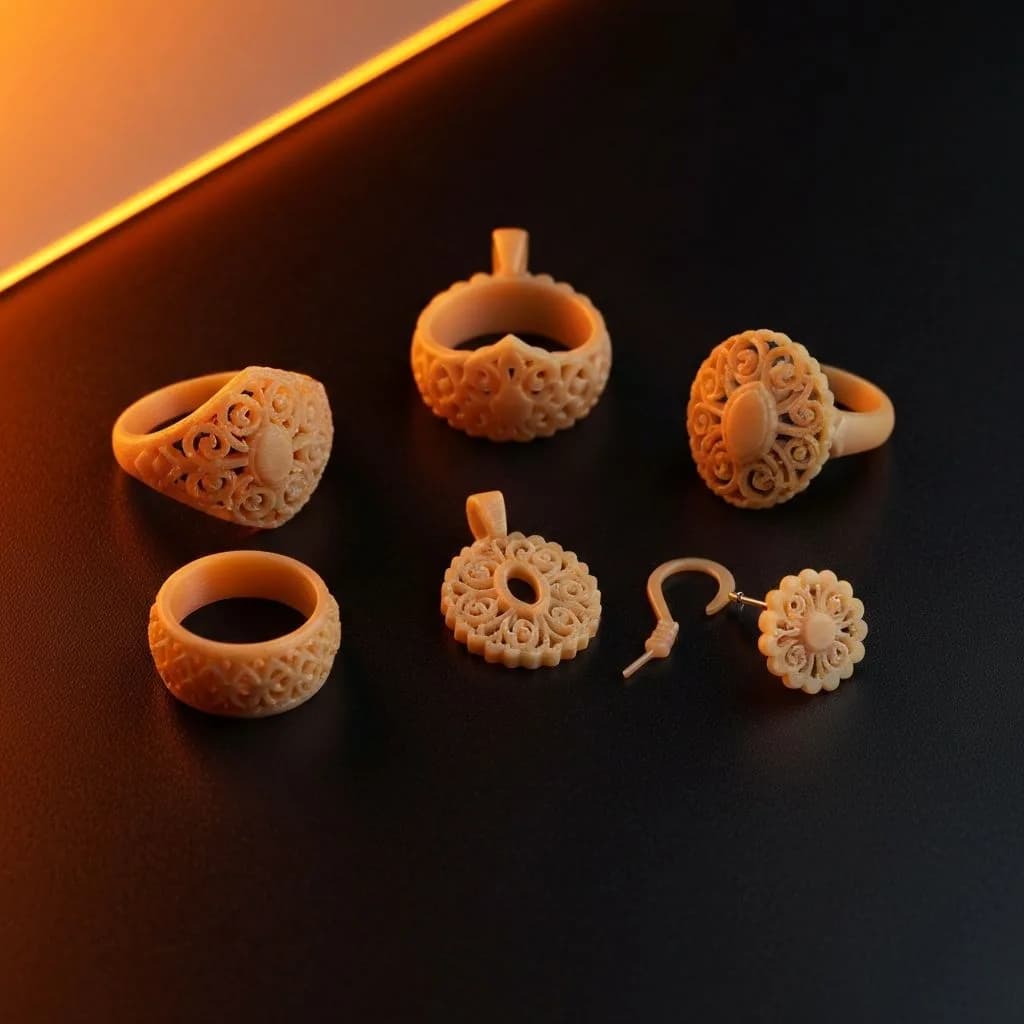
Castable wax and engineering SLA master patterns at 25 μm resolution — investment casting ready, surface quality straight from the vat.
Jewelry & Luxury
25 μm resolutionPick the right
process for the job.
Technical guides for every service.
One facility in Ahmedabad. Shipped across India.
Layer X is a single-location precision manufacturing studio in Satellite, Ahmedabad — we don’t run branches elsewhere. Every order is made in-house under one ISO 9001 certified quality system and shipped to your city. Here’s the road distance from Ahmedabad and how delivery works for the markets we serve most.
Wherever you are in India, your parts are manufactured in Ahmedabad and shipped to you — these are service areas, not physical branches. Ask about delivery to your city →
Common questions about our services
How does 3D printing compare to CNC machining for metal parts?
DMLS 3D printing excels for complex geometry (internal channels, lattice structures, organic shapes), low volumes (1–50 parts), and hard-to-machine alloys like Inconel and titanium. CNC machining is better for high-volume simple geometry, tolerances below ±0.05mm, and alloys not available in powder form. For many applications we recommend a hybrid approach — DMLS for near-net-shape, CNC for critical surfaces.
Read the metal DMLS printing guideWhat is SLS 3D printing and when should I choose it?
SLS (Selective Laser Sintering) uses a laser to fuse PA12 nylon powder into solid parts without any support structures. It is the best choice for complex geometry (snap fits, internal channels, hinged assemblies), functional end-use parts, and batches of 10–500 units. Tolerances are ±0.2mm standard; lead time is 4–6 days.
Compare FDM vs SLA vs SLSHow do I reduce the cost of my 3D printed parts?
The most effective strategies: reduce part volume by hollowing non-structural geometry, lower infill density (20% gyroid suits most brackets), eliminate unnecessary supports through orientation, batch multiple parts into a single build, and choose the right process. Send us your files for a free DfAM review with your quote.
Read the Design-for-AM (DfAM) guideDo you offer 3D printing services for aerospace and defence applications?
Yes. Layer X provides DMLS metal 3D printing in Ti-6Al-4V, Inconel 718, Inconel 625 and 316L stainless for aerospace and defence. We supply material test reports, CMM dimensional inspection, hardness certificates and full material traceability for aerospace and defence supply chains.
DMLS metal 3D printing serviceCan you produce medical device components and surgical guides?
Yes. Layer X manufactures patient-specific surgical guides in biocompatible SLA resin (USP Class VI / ISO 10993) and custom orthotics in PA12 SLS nylon. We also produce DMLS Ti-6Al-4V trial implants, with full batch record documentation and biocompatible material traceability.
SLA resin 3D printing serviceWhat materials can you print, and how do I choose the right one?
Across FDM, SLA, SLS and DMLS we run engineering polymers (PLA, PETG, ABS, ASA, PA12, PA12-CF), resins (standard, castable, dental, tough) and metals (316L, 17-4PH, H13, Ti-6Al-4V, Inconel, AlSi10Mg). We recommend the right material with every quote based on load, temperature, tolerance and finish.
Browse the full materials guideWhat surface finishes and post-processing do you offer?
We finish parts to spec — support removal, bead blasting, vapour smoothing, dyeing, painting, HIP for metal density, heat treatment and CNC finishing of critical surfaces. Tell us the target Ra or cosmetic grade and we will quote the finishing route.
See post-processing techniquesWhat files do you need, and how fast is a quote?
Upload STEP or STL (add a PDF drawing for toleranced features). Single-part quotes are engineer-reviewed and returned within 24 hours, with DfAM feedback and material alternatives included at no charge.
Request a 24-hour quoteWhat is the minimum order quantity for 3D printing?
There is no minimum order quantity at Layer X — we produce single prototypes as readily as batch runs of 500+ units. For volumes above 50 parts, contact us for tiered pricing and contract-manufacturing terms.
Contract manufacturing without tooling